So, you’ve got ink stains on your favorite shirt. I’ve faced this many times, and most stains can actually be removed with things you probably already have at home.
First, gently blot the stain with a damp cloth. Then use hairspray, rubbing alcohol, or a mixture of vinegar and baking soda, depending on the type of ink. Let it sit for a few minutes, then rinse and wash as usual.
Different inks and fabrics react differently, so I’ll walk you through what works best for each.
Immediate Steps: What to Do First!
- As soon as you notice an ink stain, act fast. Use a clean cloth to soak up any extra ink so it doesn’t spread.
- Identify what type of ink it is. Oil-based and water-based inks require different treatments, so this step is important.
Different Types of Ink Stains

Not all inks behave the same way. For example, ballpoint pen ink is usually much harder to remove than regular pen ink. Basically, inks fall into two categories:
1. Dry (Oil-based) inks
These are stubborn ones. They don’t mix with water and stick stubbornly to the fabric. Examples include ballpoint pen ink, marking ink, printing ink, India ink, carbon paper ink, stamp pad ink, and some felt-tip or magic marker inks. Because they’re water-resistant, these stains usually need extra effort to remove.
2. Wet (Water-based) inks
These inks dissolve in water, so they’re easier to clean. Regular pen ink and water-based markers fall into this group.
It’s important to know what kind of ink you’re dealing with because each type reacts differently to cleaning methods. Picking the right approach makes removing the stain much easier.
And since ink is just one example, I’ve also shared a guide on other common stains that you might run into.
5 Methods for Removing Ink Stains
Over the years, I’ve tried a bunch of ways to get ink out of clothes, and these five methods have worked best for me:
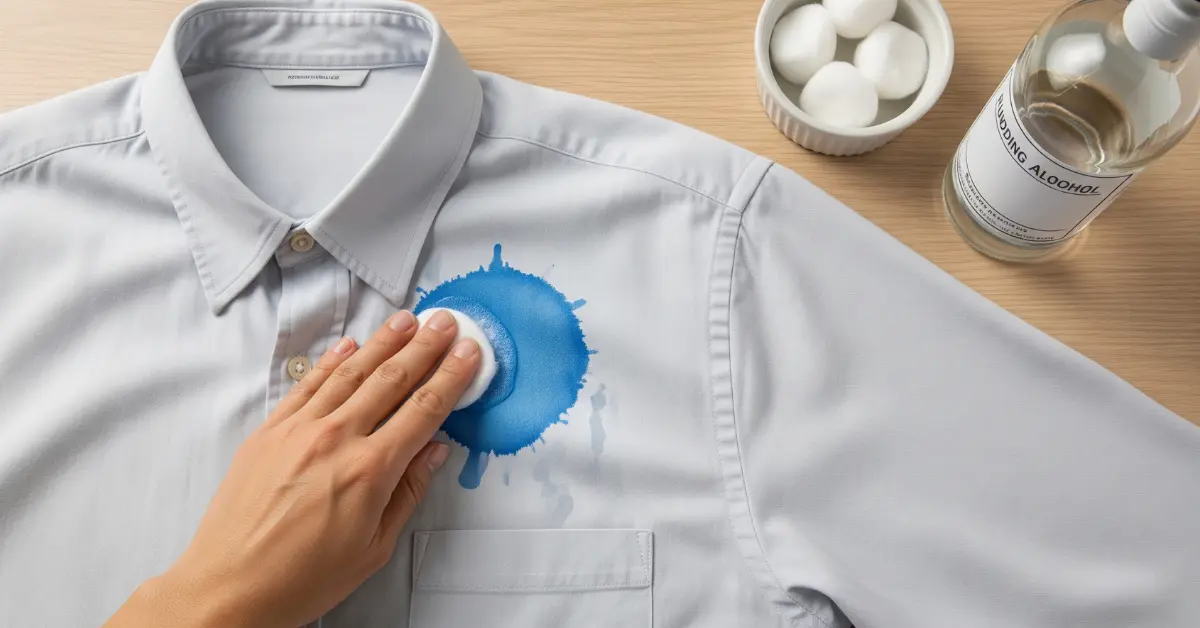
Method 1: Rubbing Alcohol Dab
This is my go-to method whenever I get ballpoint pen or marker stains on cotton. It’s quick, simple, and if the stain is fresh, it almost always works.

Before applying anything, I always blot the stain with a clean cloth. This helps soak up the extra ink and prevents it from spreading deeper into the fabric. It’s important not to rub at this stage, just gently press and lift.

Once the extra ink is gone, I dab the area with a cotton ball or cloth soaked in rubbing alcohol.
I let it sit for about 10-15 minutes so the alcohol can break down the ink. After rinsing with cold water, the stain usually fades away completely. It works best when you catch the stain while it’s still fresh.
Method 2: Vinegar and Baking Soda Paste
When it comes to stubborn oil-based stains, vinegar and baking soda never let me down. The combination makes a powerful paste that loosens the ink without being too harsh on fabric.

I usually mix about 2 tablespoons of white vinegar with 3 tablespoons of baking soda to get a thick, foamy paste. It doesn’t have to be exact, but the consistency should be spreadable—almost like toothpaste.

Next, I spread the paste directly over the stain using my finger or a soft toothbrush. A gentle circular scrub, the mixture works its way into the fabric. I let it sit for about 15 minutes before rinsing with cold water.
This vinegar and baking soda paste is one of my go-to methods for stubborn stains. For more information on removing tough stains from clothes, refer to my comprehensive guide.
Method 3: Dish Soap
Dish soap is one of the simplest and safest fixes for fresh ink stains. It works well on common fabrics like cotton, polyester, and even denim.

First, dampen the stained spot with a little water. Add a few drops of dish soap directly on the mark and gently rub it in with your fingers.

If the stain doesn’t lift right away, switch to a soft toothbrush and work it gently for a few minutes. Once done, rinse with cold water. You can repeat the process if the mark is still visible.
This method is quick, gentle on fabric, and perfect when you need a fast cleanup without harsh chemicals.
Method 4: Nail Polish Remover
This one is for really stubborn stains, but it needs extra care. Always go with acetone-based nail polish remover, and before using it, test a small hidden area of the fabric to make sure it won’t cause damage.

Here’s how I do it:
- Place a towel under the stain area to prevent transfer.
- Dab the ink gently with a cloth dipped in nail polish remover.
- Rinse the fabric with warm water.
This method can lift stains that nothing else touches, but the key is gentle blotting. Rubbing too hard will only damage the fabric.
Method 5: Milk Soak for Delicate Fabrics
Some fabrics like silk, lace, chiffon, or very light cotton can’t handle strong cleaners. For these, milk is one of the gentlest ways to deal with ink stains.

Start by pouring room-temperature milk into a bowl. Place the stained part of the fabric in the milk and let it soak.

Keep it there for 2-3 hours. Once soaked, gently rub the stained spot with your fingers to loosen the ink, then rinse with cold water.
This method takes a bit of patience, but it’s safe, chemical-free, and works surprisingly well on delicate clothes that need extra care.
What Didn’t Work for Me
Not every method works, and some can actually make things worse. From my experience:
- Pouring water directly on the stain just spreads the ink and pushes it deeper into the fabric.
- Skipping pre-treatment and washing immediately may lighten the stain, but most of the time it sets it permanently.
- Using bleach on colored clothes ruins the color; it only works on whites. If you want more tips, I’ve shared a full guide on removing stains from white clothes.
- Scrubbing with a toothbrush alone rarely removes the stain and can damage the fabric.
- Applying vinegar by itself may leave a strong, unpleasant smell and usually doesn’t get the ink out effectively.
Fabric-Specific Solutions
| Fabric | Best Method | Notes |
|---|---|---|
| Cotton (T-shirts, bedsheets) | Rinse with cold water | Test first on a hidden area; blot gently, don’t rub |
| Denim (Jeans) | Alcohol-based hairspray + blotting | Works well for ballpoint and oil-based inks |
| Polyester & Nylon | Rubbing alcohol + gentle detergent | Rinse with cold water to prevent setting the stain |
| Silk (Delicate blouses, scarves) | Milk soak | Avoid alcohol: it can damage fibers |
| Wool (Sweaters, coats) | Water + vinegar solution | Never use hot water; it can shrink or set stains |
| Linen (Shirts, dresses) | Baking soda paste + gentle blotting | Avoid excessive moisture to prevent wrinkles |
| Leather (Jackets, handbags) | Leather cleaner or cotton swab with rubbing alcohol | Condition leather afterward to avoid drying: rinse carefully |
Conclusion
Ink stains can be really frustrating, but acting quickly and using the right method makes a huge difference.
Most stains can be removed if you choose the treatment based on the type of fabric and ink. Always test on a hidden area first, and be extra gentle with delicate fabrics to avoid any damage.
FAQs
Can vinegar remove ink stains?
Yes, vinegar can help remove ink stains, especially when combined with other ingredients like baking soda.
Does dried ink come out of clothes?
Dried ink can come out, but it’s more stubborn than fresh ink. You’ll need to use the right method, and sometimes it takes repeated treatments to fully remove the stain.
Can hydrogen peroxide remove ink?
Hydrogen peroxide works well on many types of ink, including some stains on leather. It acts as a mild bleaching agent, so it’s effective at breaking down the ink, but always test it on a hidden area first.
Is ink soluble in vinegar?
Some inks, especially permanent markers, can dissolve in vinegar because of its acidic nature. This makes vinegar a useful part of homemade stain-removal solutions.
How do you use baking soda to remove ink stains?
Mix baking soda with vinegar to make a thick paste. Apply it to the stained area, let it sit for 15-20 minutes, and then scrub gently with your fingers or a soft brush. Rinse thoroughly with cold water afterward.